Quick Answer
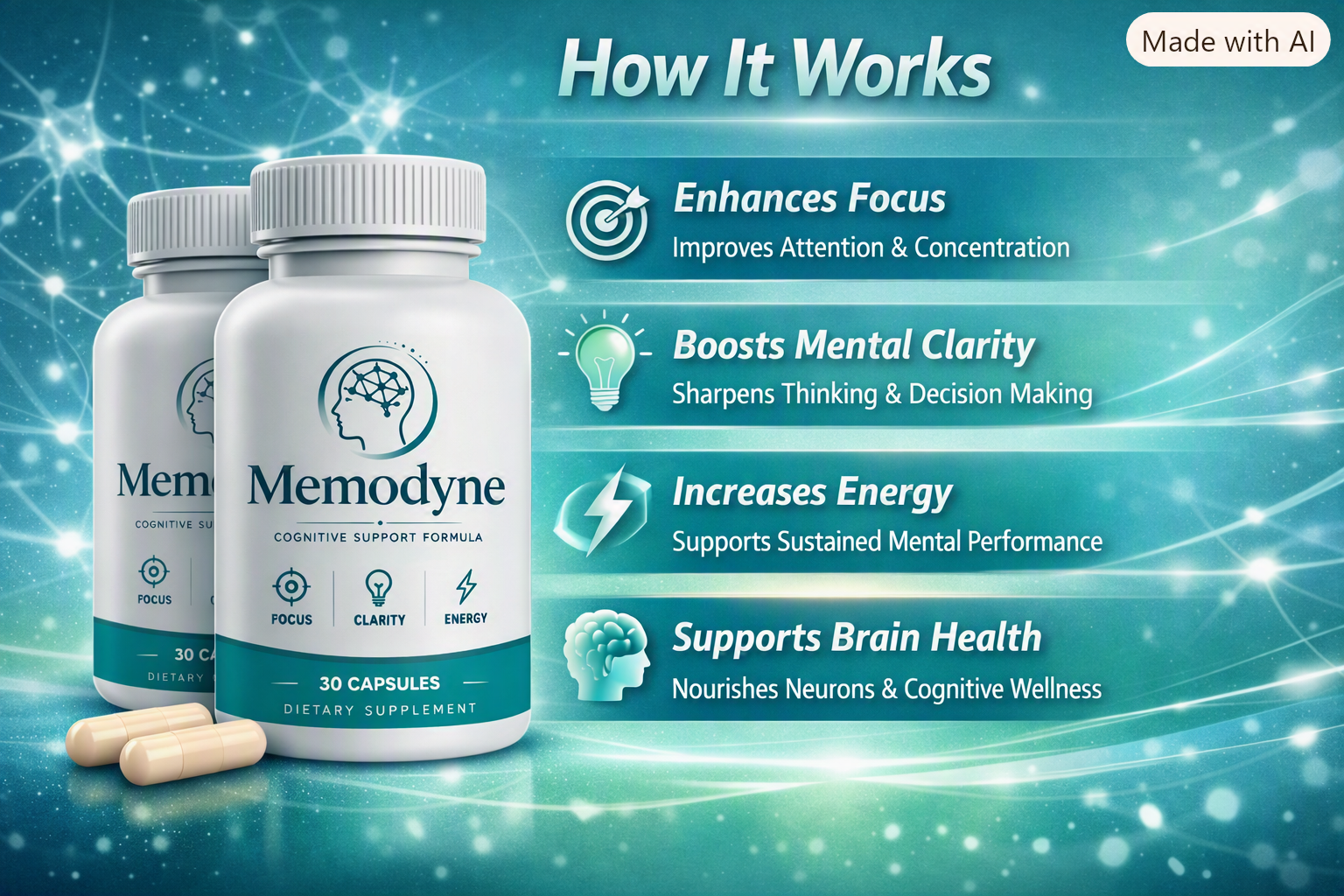
Memodyne works on three fronts: opening cerebral blood flow through nitric oxide precursors (L-Arginine and L-Citrulline in two forms each), fueling neuron energy with Niacin, and defending brain cells against oxidative stress with Beta-Alanine. It is gradual circulatory support, not a stimulant.
The Core Mechanism: Nitric Oxide And Blood Flow
The central mechanism behind Memodyne is nitric oxide (NO) production. L-Arginine is the direct substrate for nitric oxide synthase — the enzyme that produces NO, which signals blood vessels to relax and widen. This vasodilation increases cerebral blood flow, helping carry more oxygen and nutrients to brain tissue.
Memodyne uses a four-source approach to this pathway rather than relying on a single ingredient:
- L-Arginine provides the immediate substrate
- L-Arginine AKG offers a buffered, slower-absorbing form
- L-Citrulline HCL converts to arginine in the kidneys, partly bypassing liver breakdown
- L-Citrulline Malate adds an energy-production component alongside vasodilation
Step 2: Cellular Energy Via Niacin
Niacin (Vitamin B3) supports NAD+ production, the energy currency cells run on. For neurons — cells with exceptionally high energy demands — this metabolic support is particularly relevant. NAD+ is central to cellular energy metabolism and general microcirculation.
Step 3: Antioxidant Defense Via Beta-Alanine
Beta-Alanine is included as the formula's protective layer. It builds carnosine levels, a natural antioxidant researched for shielding cells from age-related oxidative stress. Most brain-support formulas skip this defensive angle entirely, focusing only on performance or stimulation.
What To Discuss With A Doctor
Because Memodyne contains nitric oxide precursor amino acids that promote vasodilation, it carries meaningful interaction considerations:
- Nitrate medications (nitroglycerin, isosorbide): combined vasodilation can cause significant blood pressure drops
- PDE5 inhibitors: overlapping vasodilation pathways
- Blood pressure medication: additive effects on blood pressure
- Blood thinners: potential additive effects on circulation
If you take any of these, show the label to your doctor before starting Memodyne.
See the full ingredient breakdown, read supported benefits, or visit the Memodyne official website to review current pricing.